

Forex prices differ between brokers because there is no single global spot price that every platform must use. Each provider can receive prices from different sources and apply its own pricing and execution arrangements.
A mismatch between screens is therefore not automatically an error or evidence of unfair dealing. For traders, the more useful question is whether the price and total cost are reasonable for the specific order. That starts with understanding how the quotes are built.
Key Takeaways
- Forex is an over-the-counter market, so brokers can draw prices from different providers rather than one central feed.
- Advertised minimum spreads don’t necessarily show what an account costs under ordinary trading conditions.
- A fair comparison uses the same instrument, quote side, account conditions and approximate timestamp.
- The displayed price can differ from the eventual fill, particularly when markets move quickly or liquidity is limited.
- Trading costs and protections vary by account and jurisdiction. Authorisation doesn’t prevent losses or guarantee protection against misconduct.
Why Forex Prices Differ Between Brokers and Trading Platforms
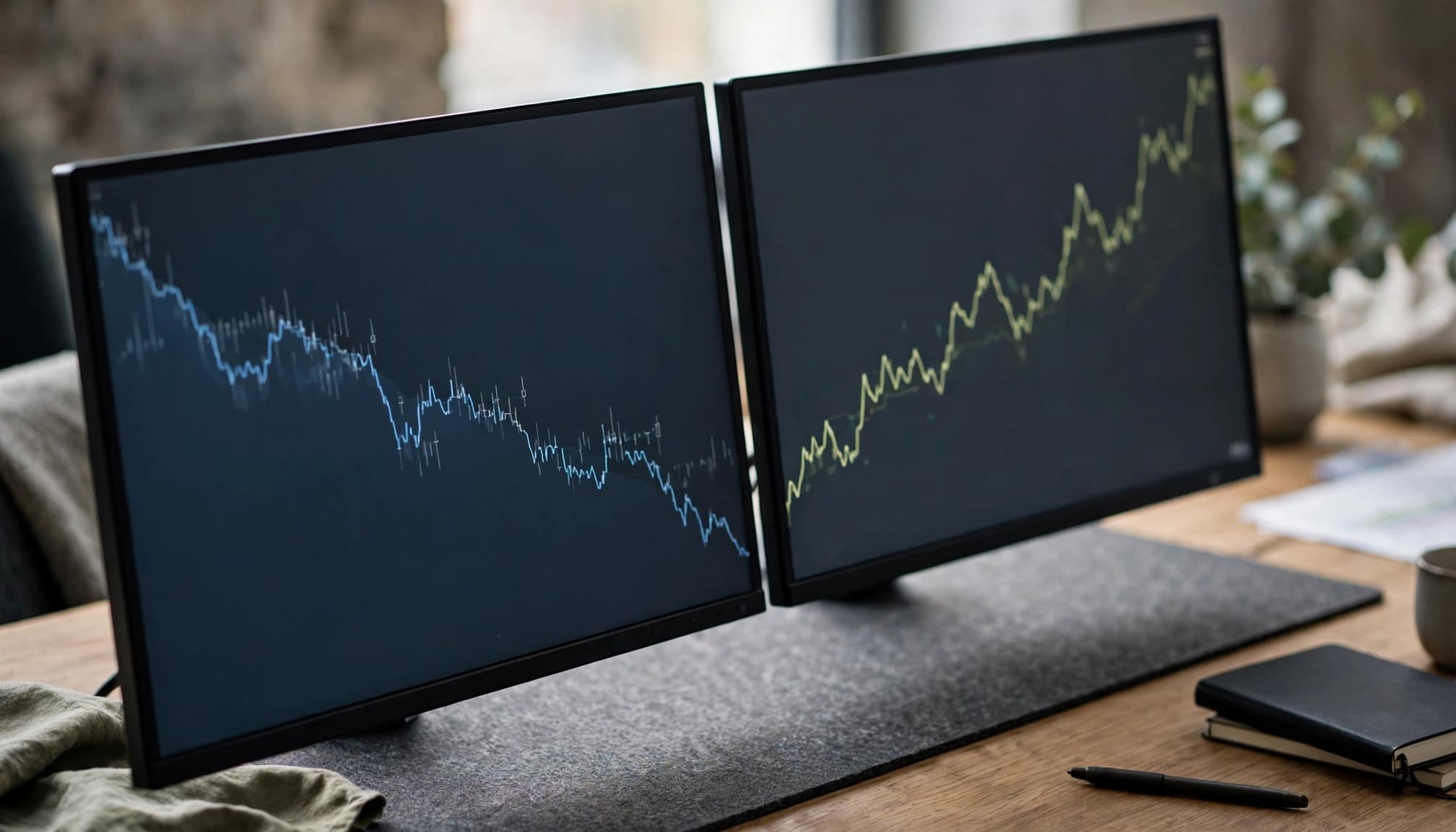
There is no single global spot forex price
The spot forex market operates over the counter, or OTC. Trading takes place across a network of dealers and venues rather than through one central exchange that supplies a universal quote.
The Bank for International Settlements describes forex trading as decentralised and fragmented. A broker may receive prices from one source or combine quotes from several liquidity providers, which are firms offering prices at which they are willing to trade.
Those sources don’t necessarily offer identical prices at the same moment. A broker’s method of selecting and combining them can also affect the quote you see. Neither screen, on its own, establishes a definitive price for the entire market.
Brokers can set different spreads and account prices
The spread is the gap between a pair’s bid and ask. A broker may add its own mark-up to the prices received from its sources, changing the spread offered to customers.
The European Securities and Markets Authority, or ESMA, addresses these arrangements in its questions and answers on CFDs and speculative products. It also discusses how firms should disclose pricing and execution information.
Account type, platform and execution arrangements can affect the quote as well. I would treat a broker’s advertised minimum spread as a starting point, not as evidence of the price available throughout a normal session. A minimum and a typical spread describe different things.
Why the same currency pair can look different at the same moment
Bid, ask and midpoint are not interchangeable
A trading platform can display a bid, an ask, a midpoint or a chart based on one of those figures. The midpoint sits between the bid and ask, so it won’t normally match either side of the quote.
Comparing one provider’s bid with another provider’s ask creates an apparent difference that says little about their relative pricing. Similarly, a midpoint chart does not show the full spread you face when placing an order.
I compare each side separately. That makes it easier to distinguish a different underlying reference price from a wider spread.
Timestamps and fast markets change the displayed quote
Two screens viewed together may not have updated at exactly the same time. A price can also change between a platform refresh, an order request and execution.
During major news, market openings or periods of thin liquidity, available prices can move quickly and spreads may widen. Daily rollover, when a provider applies its financing arrangements, can also affect conditions. There is no single rollover time shared by every broker.
Latency, the delay involved in transmitting and processing information, adds another complication. A screenshot without a reliable timestamp is weak evidence of a lasting pricing difference.
Forex CFDs may not match deliverable spot prices
A retail forex instrument may be a contract for difference, known as a CFD, or a rolling-spot contract rather than a transaction involving delivery of the currencies.
A CFD tracks a reference price under the provider’s contract terms. That reference can differ from a separately sourced spot chart. Two products bearing the same pair name can therefore have different pricing arrangements, even before spreads and timing are considered.
How to compare forex prices fairly before placing a trade

Compare the same pair, account and trading conditions
Start with equivalent instruments and record both sides of the quote at roughly the same time. Keep the account type, platform, intended order size and trading session consistent.
Several observations are more useful than one screenshot. Include ordinary conditions and, where relevant, periods when prices move quickly. A low spread in a quiet market doesn’t establish what an order will cost during a news release.
Our guide to comparing broker fees and conditions covers the wider account comparison. When assessing published figures, don’t treat one provider’s minimum as equivalent to another’s typical spread.
Check fills, slippage and order handling
A displayed quote doesn’t guarantee the eventual execution price. Slippage is the difference between the expected price and the fill, and it can work in your favour or against you.
Execution records provide a more useful basis for assessment than a chart alone. Compare requested and filled prices, alongside timestamps, rejected orders and any requotes. A requote is a revised price offered after an order request.
A small sample cannot establish future execution quality. It can, however, help identify a recurring difference that deserves an explanation.
Include every cost and relevant protection
A narrow spread can come with a separate commission. Overnight financing, currency conversion, payment charges and inactivity fees may also affect the overall cost.
Our explanation of raw spread account costs shows why the account label alone isn’t enough to establish value. Financing can differ for long and short positions, while commission may apply when both opening and closing a trade.
The legal entity serving your account matters alongside cost. Protections and terms can differ by country and account classification. Authorisation doesn’t guarantee against losses or misconduct, and a lower quoted cost doesn’t make a trading strategy profitable.
Does a different forex quote mean a broker is manipulating prices?
A different quote alone doesn’t prove manipulation. Separate price sources, timing differences and contract terms are all plausible explanations.
That doesn’t mean every discrepancy deserves a dismissal. I would look more closely at repeated, unexplained differences between an order request and its fill, especially if the broker’s records or explanation don’t account for them. A vague execution policy or unclear pricing terms also make it harder to assess what happened.
Keep the relevant order records, timestamps and correspondence together. They give the broker something concrete to address and provide a clearer basis for a complaint if its response remains inadequate.
Even then, a concern and proof are different things. A sequence of unfavourable fills may justify scrutiny, but it doesn’t establish intent or misconduct by itself. Market movement, available liquidity and the order-handling process all matter to the assessment.
I also distinguish between a poor commercial offer and unfair dealing. A broker can charge a wider disclosed spread than a competitor without that difference alone showing manipulation. You may still decide the account offers poor value for your circumstances.
Marketing labels deserve the same scepticism. An account described as having direct market access, for example, doesn’t automatically guarantee the best price or eliminate slippage. The relevant evidence is the service’s stated terms and the execution information available for the orders concerned.
Frequently Asked Questions
Which forex price should you use when comparing brokers?
Use the relevant executable quote side for the same instrument and account conditions. A chart midpoint can help you follow market movement, but it doesn’t show the complete price available for an order.
Can MetaTrader and a broker’s own platform show different quotes?
They can, depending on the feed, account pricing and refresh timing. The platform name alone doesn’t establish that both screens use identical data or execution arrangements.
Can a trade fill at a different price from the quote shown?
Yes. Prices and available liquidity can change between the displayed quote and execution, producing favourable or unfavourable slippage. The execution record shows the price at which the order filled.
Do forex prices differ more during major news?
They can. Volatility and changes in available liquidity may widen spreads or increase slippage, although the effect won’t be identical at every broker. A quiet-market quote doesn’t predict the conditions available during an announcement.
Are forex prices the same across European countries?
The underlying forex market is international, but the company serving an account and its product terms can vary by country. Account classification and available protections can vary too, so a brand’s presence in one market doesn’t make every account equivalent.
Compare the trade, not just the screen
Different forex quotes can arise from ordinary market structure and provider-specific pricing. I wouldn’t treat a mismatch as proof of wrongdoing, but I wouldn’t ignore repeated unexplained execution differences either.
A sound comparison focuses on equivalent products, actual fills and total costs. Review the execution terms before trading, and keep the risk in view: leverage can magnify losses even when a broker’s pricing looks competitive.