

When explaining how to read a forex account statement, I separate cash movements, closed-trade results, open-position changes and costs before comparing totals. A statement records activity over a period and shows the account’s position at its reporting cut-off.
The difficulty is that money entering an account can resemble a gain, whilst a positive balance can sit alongside substantial open losses. I recommend treating balance and equity separately, because they answer different questions and may include different adjustments under the broker’s accounting terms.
Start with the report’s dates and account details, then trace the transactions behind its headline figures rather than treating a profit column as a complete account of what happened.
Key Takeaways
- Establish the statement period, account currency and account number before interpreting any totals or comparing reports.
- Separate deposits and withdrawals from trading results, because transferring money doesn’t create a trading profit or loss.
- Read balance alongside equity, since open-position losses may not appear in the booked balance.
- Locate commissions, financing and other charges, including costs recorded separately from individual trades or settled later.
- Reconcile balance and equity independently, allowing for credit and adjustments without counting the same cost twice.
How to Read a Forex Account Statement from the Top Down
I begin with the report’s scope rather than its profit figure. A monthly account statement, a closed-trade export and a live account screen can cover different information. Their totals aren’t automatically comparable, even when they come from the same trading account.
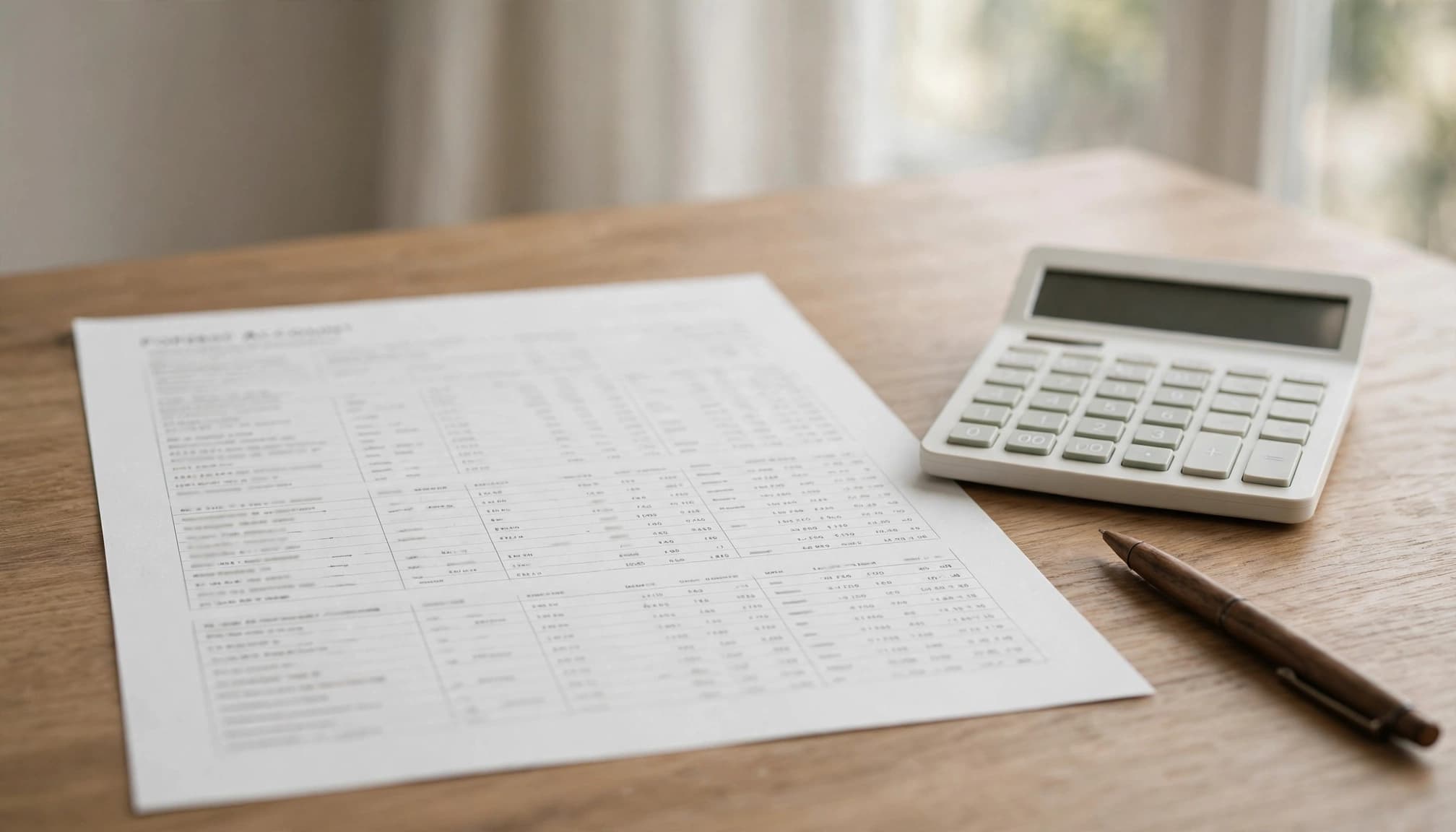
Establish the period, account and currency
Identify the opening and closing dates, account number and reporting currency. Also note the cut-off time and time zone where supplied. A trade near midnight can fall into different reporting periods when timestamps use different zones.
Account currency matters because an instrument’s quoted currency may differ from the currency used for reporting. A EUR/USD trade in a GBP account doesn’t make every figure a dollar amount.
Read the statement notes alongside the applicable account terms. For instrument-level context, our guide to forex contract specifications explains contract sizes and other fields behind the trade entries.
Distinguish balance, equity and credit
These labels describe different parts of the account.
| Field | What it generally tells you |
|---|---|
| Balance | Booked account funds, excluding current open-position profit or loss. |
| Equity or NAV | Account value after allowing for open-position results and relevant adjustments. |
| Credit | Credit supplied by the broker, which isn’t necessarily your deposited cash. |
The relationship matters more than which number looks largest. MetaTrader 5’s live account field definitions exclude open-position results from balance.
However, report conventions also matter. The description of MetaTrader 5’s balance and equity graphs includes account credit in its reported balance figure. I wouldn’t assume identically named fields always contain identical components.
A balance curve can therefore remain stable whilst an open position loses value. Equity reveals that current effect, although market prices can change it again before the position closes.
Separate Trade Results from Cash Movements and Fees
A higher closing balance doesn’t establish that trading was profitable. Deposits can outweigh trading losses, whilst withdrawals can reduce the balance after profitable closed trades. I therefore read the transaction history by category before drawing conclusions about what changed the account.
Match closed trades and identify transfers
For each closed trade, follow its identifier and read the instrument, direction, size, opening details and closing details together. Match any partial closures to the relevant position rather than assuming each row describes a separate trade.
Then distinguish realised profit or loss from deposits, withdrawals and internal transfers. The amount moved between your bank and broker says nothing, by itself, about the success of the trades.
Our guide to reading a forex trade confirmation explains the transaction-level details behind those entries. Meanwhile, MetaTrader 5’s mobile payment history records deposits and withdrawals, which belong outside your assessment of trading profit.
Locate costs without deducting them twice
Determine whether the reported result is gross or net of commission, financing and other fees. Commission may appear against a trade or elsewhere in the account history. An opening charge and a closing charge can also belong to the same position.
Overnight financing, often labelled swap, can create a debit or credit. Its timing and presentation depend on the account terms. Currency conversion, inactivity charges and payment fees may appear separately again.
The spread, the difference between buying and selling prices, usually affects the execution prices rather than appearing as a separate cash debit. Slippage also changes the executed price compared with the expected price; it isn’t necessarily an itemised fee.
I trace costs to where they actually enter the reported result. Deducting commission again from an already net figure understates performance. Conversely, reading a gross profit column without separate costs overstates what the account retained.
A round-turn commission already covers opening and closing. Counting that quoted amount twice would also overstate the charge.
Reconcile the Statement and Investigate Differences
Reconciliation means explaining the movement between the opening and closing figures. I tackle the booked balance first, then equity. Combining them too early makes open-position changes look like missing cash.
Account for the closing balance
Start with the opening balance and trace deposits, withdrawals, realised trading results and charges through the ledger. Together with any recorded adjustments, those entries should explain the closing balance.
This is a practical framework, rather than a universal broker formula. A net trading result may already include commission or financing. Credit movements, corrections and transfers may also have their own categories.
Payment currency adds another possible difference. MetaTrader 5’s payment currency conversion guidance describes conversion when a payment currency differs from the account currency. The original bank debit and the credited trading amount therefore needn’t share the same numerical value.
Compare transactions using the same currency and reporting basis. Keep external bank charges separate when they never entered the broker’s ledger.
Explain equity at the reporting cut-off
Next, use the closing balance as the starting point for understanding reported equity. Account for open-position results, credit and any other components included under that report’s definitions.
MetaTrader 5’s advanced trading report documentation distinguishes open positions and account-level margin fields. A closed-trade export alone may therefore lack information needed to explain the account’s full position.

A live equity figure and yesterday’s closing equity describe different moments, even when no trade has closed.
For an unexplained difference, trace transaction identifiers, timestamps, conversion entries and rounding. Also distinguish accrued charges from settled deductions. Preserve the original statement and record the discrepancy rather than changing figures simply to make them agree.
A mismatch deserves an explanation, but doesn’t by itself establish misconduct.
Frequently Asked Questions
What do margin and free margin mean?
Margin is collateral required to support positions, rather than a trading fee or a ceiling on losses. Free margin describes the remaining availability under the account’s calculation. Our explanation of how forex margin works covers its relationship with equity and position close-outs.
Can an account statement establish the tax due?
A statement provides transaction evidence, but doesn’t determine your tax treatment. Tax residence, product structure and national rules can affect the calculation. I would retain statements, trade records and conversion details for any applicable tax reporting.
Does a statement prove that a broker is legitimate?
A statement doesn’t establish regulatory authorisation, financial strength or reliable withdrawals. Equally, access to MetaTrader software isn’t regulatory approval. Protections depend on the contracting entity, jurisdiction and account classification, rather than the appearance of a report.
Does a completed withdrawal mean the bank has received it?
A broker’s completed or approved status can describe its own processing stage. Payment-provider handling, intermediary processing and receiving-bank crediting are separate events. The statement entry alone doesn’t establish when cleared funds became available outside the trading account.
Can a profitable reporting period establish a reliable strategy?
One profitable period doesn’t establish repeatable performance. Deposits, costs, open exposure and the length of the record affect how meaningful the headline result is. Historical results also don’t predict the outcome of future trades.
Is it safe to share a statement publicly?
Statements can expose account numbers, names, addresses and transaction references. I would remove identifying information before sharing an extract publicly. Keep an unedited original privately, because redacted screenshots can omit context needed to understand the account.
Read the Activity, Then Assess the Totals
The most useful habit is separating cash movements, closed trades, open-position changes and costs before interpreting the account’s headline numbers. I recommend reconciling balance first, then explaining equity using the same reporting cut-off and the statement’s own definitions.
That discipline makes the recorded activity easier to understand without turning a profitable column into evidence of a sound strategy. A statement explains what the account recorded; it doesn’t predict future results, establish broker reliability or remove the risks of leveraged trading.