
US-Iran tensions create real risks for the UAE’s financial centres, but the evidence doesn’t establish lasting damage. My assessment of UAE financial hub status, based on information available by 27 October 2026, separates economic pressure from confirmed losses of firms, capital or staff.
Market uncertainty alone doesn’t prove that businesses are leaving Dubai International Financial Centre (DIFC) or Abu Dhabi Global Market (ADGM). The distinction matters because both alarmist headlines and reassuring annual growth figures can overstate what is known.
The starting point is dated, comparable evidence, rather than assumptions about either decline or uninterrupted growth.
Key Takeaways
- The conflict has weighed on parts of the UAE economy, but lasting damage to DIFC or ADGM isn’t established.
- Both centres reported substantial workforces in 2025. Those figures describe their pre-conflict position, rather than current retention.
- The IMF reported tighter but ample banking liquidity in July 2026, alongside continued growth in deposits and credit.
- Sanctions compliance, insurance and staff mobility are possible pressure points, not demonstrated centre-level losses.
- Persistent departures, declining client activity and repeated operating interruptions would carry more weight than isolated market swings.
Is UAE Financial Hub Status at Risk Amid US-Iran Tensions?
Yes, there are credible risks. However, a difficult operating environment doesn’t automatically mean a lasting loss of financial-centre status. That stronger conclusion requires evidence that firms, clients and financial activity are persistently moving elsewhere.
The IMF’s 17 July 2026 assessment identified economic pressure and substantial financial buffers. It was a July assessment with a conditional outlook, rather than confirmation of conditions through October.
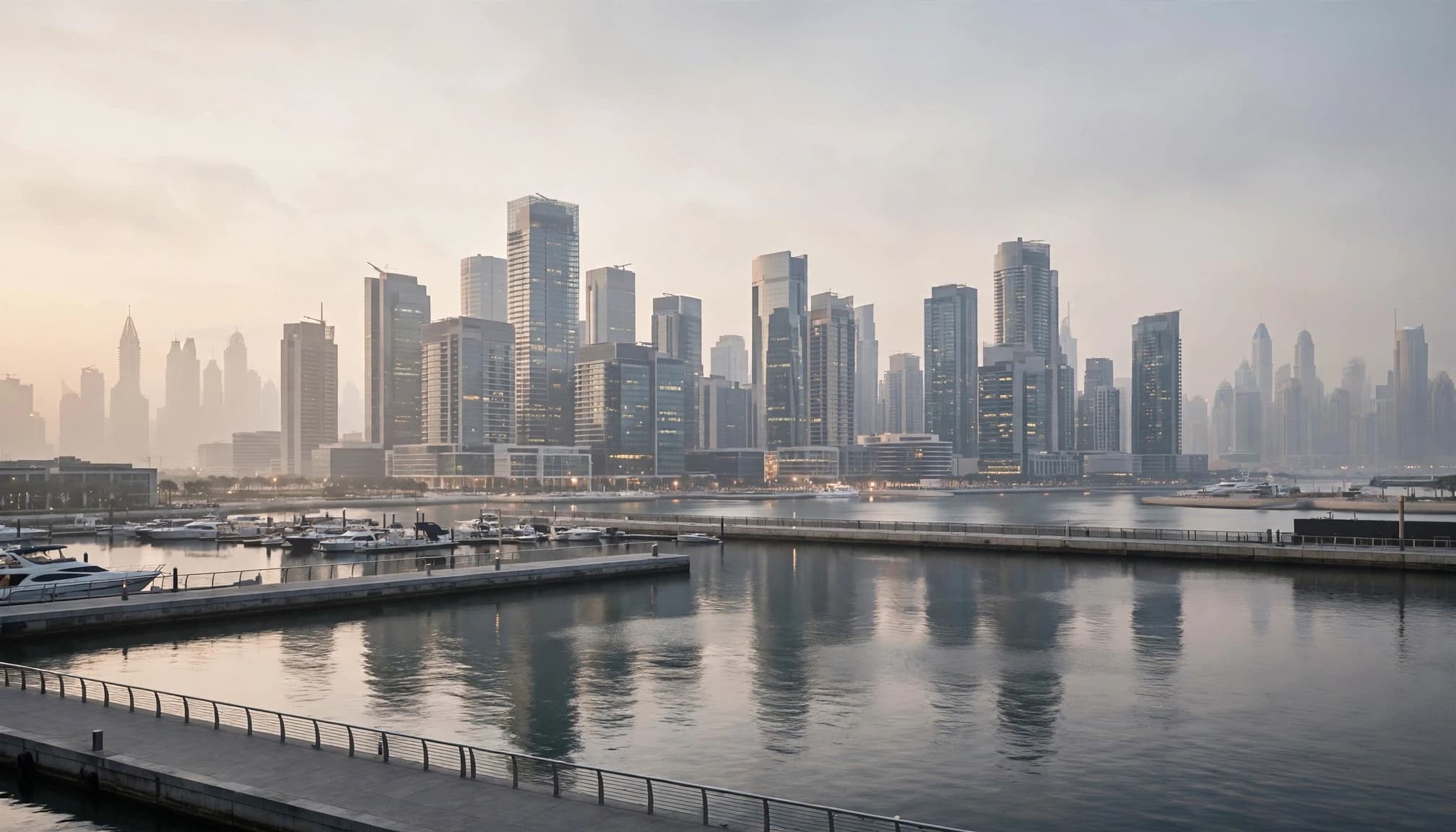
DIFC and ADGM entered the crisis from a strong position
DIFC’s results, announced on 5 February 2026, reported 50,200 financial-services-related professionals for 2025. ADGM’s year-end figures reported 44,339 workers and more than 12,000 active licences.
ADGM also reported 171 asset and fund managers overseeing 244 funds. These figures show the scale of the ecosystem entering 2026.
I wouldn’t rank the centres using their workforce totals alone. DIFC’s financial-services-related professionals and ADGM’s wider workforce use different definitions. Licences measure something different again.
Strong annual results do not rule out later losses
The publication date of an annual result can obscure the period it describes. A report released in March 2026 can still concern activity ending in December 2025.
Comparable post-conflict figures for firms, staff, assets and relocations aren’t established by the available evidence. That prevents a firm conclusion about retention at either centre.
The 2025 results therefore provide a useful baseline. They cannot demonstrate uninterrupted growth after the shock, or establish that later losses occurred.
How US-Iran tensions could affect the UAE’s financial centres
Some economic effects are documented. Other risks remain plausible without evidence showing that they have produced losses at DIFC or ADGM. I keep those categories separate because exposure and realised damage answer different questions.
Hormuz disruption can unsettle trade, travel and business confidence
The IMF linked uncertainty and on-and-off disruption of the Strait of Hormuz to weaker non-hydrocarbon activity. It identified tourism, transportation, trade and real estate amongst the affected areas.
Financial centres depend on international connectivity, reliable services and confidence in business continuity. Disruption elsewhere in the economy can therefore affect their clients, counterparties and operating decisions.
However, the IMF’s assessment doesn’t quantify direct damage to DIFC, ADGM or their infrastructure. A slowdown in transport or property activity cannot be converted into a financial-centre loss without further evidence.
Sanctions checks, insurance and staff mobility are risks to watch
Sanctions screening and correspondent banking are potential pressure points. Correspondent banks provide access to payments and other services across borders. More restrictive checks could add friction to legitimate transactions.
Insurance availability, costs and workforce mobility also matter. Firms need staff who can travel and cover that remains suitable for their operations.
The evidence doesn’t establish a conflict-related UAE sanctions action, firm withdrawal, insurance repricing or staff exodus. These remain risks to assess, rather than losses to assume.
My assessment of Dubai forex brokers amid regional conflict applies the same distinction: regional disruption doesn’t establish what happened to an individual broker’s service.
What the evidence says about resilience, and what remains unknown
There are grounds for rejecting claims of an established financial-system breakdown. They don’t support the opposite claim that every institution avoided disruption. System-wide findings and centre-specific performance need separate treatment.
Banks and policy measures offer some protection against a shock
In July 2026, the IMF reported that UAE banks remained well-capitalised. Their capital buffers were well above required ratios.
Liquidity had tightened since the conflict began, but remained ample. Deposits and credit continued to expand. The IMF expected private-sector credit growth to moderate as non-hydrocarbon activity slowed.
The Central Bank of the UAE approved its Financial Institution Resilience Package on 17 March 2026. The UAE’s statement to the IMF credited coordinated measures with supporting banking and payment-system stability.
I treat that statement as the government’s account. The available evidence doesn’t quantify the package’s realised impact or show that every bank and customer experienced the same conditions.
Trade rerouting may help, but it does not settle the hub question
The IMF cited rerouting of oil and other trade flows as support against the shock. It also expected oil exports and production to recover during the second half of 2026.
Those expectations depended on the outlook at the time, including gradual US-Iran normalisation. A forecast recovery shouldn’t be presented as a completed one.
Trade alternatives can support income and business continuity. They don’t establish whether financial firms retained their UAE staff, funds or client mandates.
As my analysis of oil price shocks and Gulf economies explains, export volumes and prices need to be assessed together. Neither alone establishes the income actually earned.
Which signs would show lasting damage rather than temporary volatility?
I would judge UAE financial hub status across several reporting periods. The useful test is whether comparable measures show a persistent loss of activity, rather than a short-lived reaction to uncertainty.
Track firms, funds, jobs and client activity over time
Active firms, licences, closures and employment provide part of the picture. Assets under management, fund subscriptions, redemptions and client mandates help show whether substantive business remains.
Bank deposits, lending and capital flows add context, although national totals cannot substitute for centre-level figures. Definitions and reporting periods need to match before changes are interpreted.
A licence count alone is insufficient. A business may retain a legal presence whilst moving staff or decision-making elsewhere. Conversely, an additional overseas office doesn’t establish that its UAE operations have been reduced.

Look for repeated disruptions, not isolated market swings
Repeated payment failures, sustained travel restrictions and documented correspondent-bank exits would deserve attention. Confirmed relocations, reduced insurance availability and persistent declines in client activity would strengthen the case for lasting damage.
Timing and causation still matter. An office closure needs a documented connection to the conflict before it becomes evidence of conflict-driven withdrawal.
A licence count can remain stable whilst substantive activity changes. Staff, assets and client business need to be assessed alongside registrations.
One-day market moves carry less weight. Prices can respond immediately to uncertainty, whilst business relocation involves decisions that may emerge only over successive reporting periods. The two measures shouldn’t be treated as interchangeable.
Frequently Asked Questions
Have financial firms left Dubai or Abu Dhabi because of the tensions?
The evidence reviewed doesn’t establish a conflict-related exodus or provide centre-level relocation totals. That is an evidence gap, rather than proof that no individual firm has moved. I wouldn’t turn an absence of comparable figures into a claim of complete stability.
Did the conflict cause UAE banks to run short of liquidity?
The IMF reported that liquidity tightened, but remained ample in July 2026. Banks were also well-capitalised, and deposits and credit continued growing. That system-wide assessment doesn’t guarantee identical conditions at every institution or rule out difficulties with particular transactions.
Does the UAE’s 2025 financial-centre growth prove it is safe now?
The figures establish a substantial pre-conflict base, rather than present-day safety or future stability. They also don’t assess a particular financial product or account. I wouldn’t use a financial centre’s historical growth as reassurance about an individual investment or service provider.
What would make the risk to UAE hub status more serious?
Persistent firm and staff departures, declining fund or client activity and repeated operating interruptions would strengthen the case. Documented losses of financial access across several reporting periods would also matter. A single market decline or security headline cannot establish that pattern.
What did the IMF’s July 2026 assessment cover?
The statement followed a staff visit to Abu Dhabi and Dubai between 7 and 16 July 2026. It addressed the economy, banking conditions and policy response. Its second-half outlook depended on assumptions about the conflict, so I distinguish those forecasts from its reported observations.
Conclusion: Lasting damage requires stronger evidence
US-Iran tensions have created credible operating risks and weighed on parts of the UAE economy. The available evidence doesn’t establish a lasting loss of financial-centre status for DIFC or ADGM.
My judgement depends on centre-level evidence over time: whether firms, staff, assets and client activity remain or depart. Pre-conflict growth figures and market headlines cannot settle that question on their own.