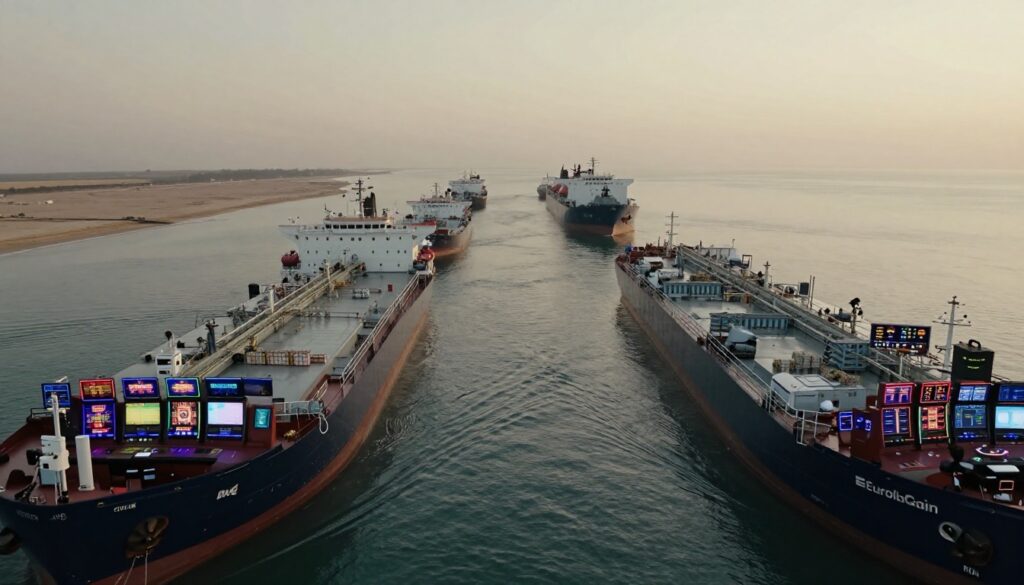
The Hormuz Strait crisis threatens energy deliveries, freight costs and market stability well beyond the Gulf. As of 28 October 2026, reports establish serious maritime danger, but not a complete closure or a fully verified conflict timeline.
For European readers, the exposure includes oil, liquefied natural gas (LNG), company earnings and currency movements. I distinguish confirmed incidents from attributed claims and market scenarios because each supports a different conclusion.
The starting point is the gap between a threatened shipping route and energy that has actually stopped reaching buyers.
Key Takeaways
- Reports establish severe shipping danger and reduced traffic, but do not confirm a complete closure of Hormuz.
- The IEA’s estimate that 93% of Qatar’s LNG exports crossed Hormuz in 2025 describes historical exposure, not today’s supply losses.
- Weekly transit totals and US-facilitated passages use different periods and counting methods.
- Improved shipping access would not automatically repair damaged production facilities or restore completed deliveries.
- European investors face product, currency and execution risks alongside uncertainty about energy supply and prices.
Hormuz Strait Crisis: How the US-Iran war is unsettling markets
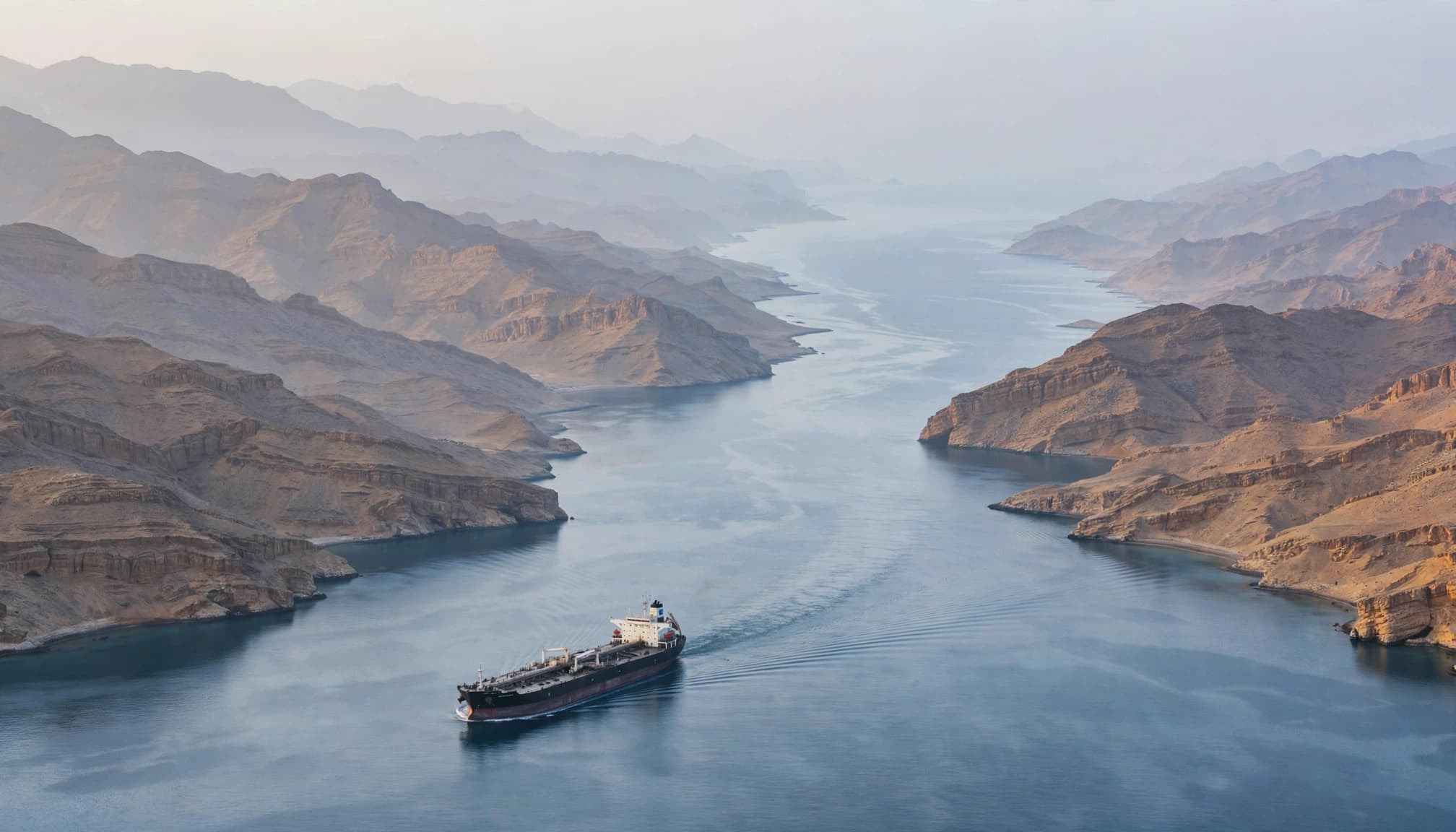
Hormuz connects Gulf export terminals with international buyers. Threats to vessels can delay loadings, disrupt schedules and change expectations about cargo availability.
The International Energy Agency (IEA) estimates that 93% of Qatar’s LNG exports passed through Hormuz in 2025. That is baseline exposure, not a current measurement of lost supply.
What recent shipping reports confirm, and what remains disputed
At 17:15 GMT on 22 October, a tanker reported being struck by an unknown projectile, seven nautical miles northeast of Limah, Oman. The UKMTO warning published on 23 October described a delayed report and did not establish responsibility.
Iranian authorities also claimed that ships had been damaged and that a tanker had struck a mine. Those claims lack independent confirmation in the available reporting. They cannot be treated as equivalent to the details recorded in the UK Maritime Trade Operations (UKMTO) notice.
Why transit figures need careful comparison
Reporting recorded 254 passages for the week ending 14 October, comprising 129 inbound and 125 outbound. The total was described as roughly 70% below pre-conflict levels.
Its composition matters: 42 passages were observed through vessel-tracking signals, while 212 were attributed to US-reported facilitated transits that UKMTO could not independently verify.
Separately, reporting on the Joint Maritime Information Centre (JMIC) update listed 101 US-facilitated passages during 22 to 24 October. Different periods and counting methods prevent a direct recovery comparison. Neither figure establishes a return to ordinary commercial traffic.
How shipping disruption can affect oil, LNG and prices
The commercial chain has several stages: production, loading, transit and delivery. Disruption at any stage can affect available cargoes, benchmark prices and buyers’ costs.
Available October reporting does not establish a reliable current global supply-loss estimate or broadly applicable insurance premium.
Separate route access from damage to production
An accessible shipping route cannot compensate for an export plant that cannot produce. Qatar’s Ras Laffan facilities illustrate why route access and production capacity need separate assessment.
Liquefaction plants cool natural gas into liquid for transport. Damage can constrain output even when ships can reach loading terminals. Equally, functioning production does not guarantee deliveries if loaded vessels face restrictions.
QatarEnergy declared force majeure on 4 March 2026. That contractual provision may excuse or delay affected obligations; it does not automatically cancel every buyer’s contract.
My analysis of Qatar LNG supply disruption examines the distinction between production, shipping access and customer deliveries.
Read price moves as reactions, not forecasts
A 28 October report described oil prices falling about 1% during the day. Without a specified benchmark and observation time, that is a limited market snapshot.
It does not demonstrate that security improved or supply recovered. Prices also reflect inventories, demand, replacement cargoes and risks already anticipated.
Regional gas benchmarks can respond differently. Dutch TTF reflects European conditions, while Henry Hub reflects the US market, including domestic supply and export constraints.
I would not turn either a one-day price move or a regional benchmark divergence into a forecast. A traded price can change before physical deliveries do.
What to watch for signs of escalation or recovery
The Hormuz Strait crisis requires several measures rather than one headline indicator. Security conditions, commercial willingness to sail and completed energy deliveries answer different questions.
I give greater weight to dated notices and comparable observations than to unsupported claims of escalation or recovery.
Track incidents, navigational warnings and vessel movements
Numbered UKMTO warnings provide dated incident details. JMIC assessments provide a broader threat judgement, although secondary summaries should remain distinct from the original advisory.
Independently confirmed vessel damage, casualties and navigational hazards strengthen the evidence. An allegation about a mine, however, does not establish its location, cause or responsibility.
Transit comparisons need consistent coverage, direction and vessel categories. An outbound empty tanker says something different about supply from a loaded carrier reaching its customer.
The Automatic Identification System (AIS) broadcasts vessel information, but AIS-visible traffic is only an observation set. Assisted passages and tracking signals alone do not establish normal commercial operations.
Check repairs, replacement cargoes and demand
Repair schedules are estimates until work and output support them. Installed capacity measures potential production, rather than current availability.
I also distinguish an announced purchase, a signed supply agreement, a loaded cargo and a completed delivery. Each represents a different degree of certainty.
Reports of customer suspensions deserve the same discipline. A notice affecting particular contracts cannot establish the position of every buyer.
Storage levels, replacement cargoes and weather-related demand can either cushion or worsen disruption. Colder conditions may increase competition between European and Asian buyers for flexible LNG.
Sustained deliveries therefore provide stronger recovery evidence than a planned purchase or a single successful passage.
How European investors can manage uncertainty without guessing the market
The practical investment question is how an exposure behaves under different outcomes. A confident geopolitical prediction does not remove product costs or the possibility of loss.
This is general risk analysis, not a personal recommendation or trading signal.

Stress-test more than one outcome
I would compare three paths: a short disruption, prolonged supply losses and a gradual recovery.
A short interruption may be absorbed through inventories and replacement cargoes. Prolonged losses could increase competition for available energy. Gradual recovery could leave production and deliveries constrained after maritime access improves.
The same headline can affect companies differently. Routes, contracts, inventories, hedging and rerouting options matter more than a sector label.
An energy producer facing lost exports has different exposure from one selling unaffected production. An airline’s fuel contracts may also delay the effect of changing oil prices. These are mechanisms to assess, not automatic winners or losers.
Understand product, currency and execution risks
Oil and gas funds may use futures rather than hold physical commodities. Replacing expiring contracts can create roll costs; fees and tracking differences also affect returns.
Currency movements can change the result in euros, sterling, Swiss francs or another account currency.
Leverage magnifies exposure and losses. Volatility can widen spreads, create price gaps and cause slippage, where execution differs from the requested price. An ordinary stop-loss cannot guarantee its trigger price.
Product documents define the benchmark, costs and settlement terms. Access and protections depend on the country, provider and account classification. My guide to European broker rules and protections explains why UK, EU and Swiss arrangements are not interchangeable.
Frequently Asked Questions
Is the Strait of Hormuz closed?
The available reporting shows severe danger and sharply reduced traffic, but does not establish a complete, officially confirmed closure. Continued passages also do not demonstrate that the route is operating normally. I would avoid either extreme description.
Can tankers avoid the Strait of Hormuz?
Many Gulf cargoes have no practical replacement sea route around the chokepoint. Pipelines can provide alternatives for some oil flows, but cannot replace all affected exports or transport Qatar’s LNG. Escorts support passage through the area rather than remove dependence on it.
Does a fall in oil prices mean the crisis is over?
A price decline cannot confirm a security or supply recovery. Markets can react to weaker demand, changing expectations or positions being closed before physical conditions improve. I give more weight to sustained transit and delivery evidence when assessing recovery.
Will the disruption automatically push oil and gas prices higher?
The direction is not predetermined. Duration, replacement supply, inventories and demand all matter, alongside the disruption already reflected in prices. A serious incident can coincide with falling prices if the market had expected a worse outcome or other factors outweigh it.
How can you check whether a shipping claim is reliable?
I start with the incident date, location, numbered notice and wording, then separate reported facts from allegations about responsibility. The dated account of the Limah incident illustrates why incident and publication dates must remain distinct. Repetition across headlines does not provide independent corroboration when they rely on the same original claim.
Conclusion: Assess the Evidence Behind the Market Reaction
The Hormuz Strait crisis creates real shipping and supply risks. Headlines and isolated price moves cannot establish their scale or duration.
My assessment rests on comparable evidence: confirmed incidents, consistently defined transit figures and energy that reaches buyers. Attributed claims and recovery forecasts belong in the analysis, but should retain their qualifications.
For European investors, understanding that uncertainty matters more than treating the crisis as a buy-or-sell signal.