Market depth shows visible buy and sell interest at different prices. It can help you understand the orders or quotes shown on a particular platform, but it cannot reveal the whole forex market or predict where prices will go.
I consider it a snapshot of available information, not a promise of better trading results. The distinction matters before you use a depth display to assess liquidity or plan an order.
Key Takeaways
- Market depth, or DOM, shows displayed buying and selling interest at successive prices on a particular feed.
- Quantities near the best bid and ask can help you assess visible liquidity, but they may change before an order reaches execution.
- An order that exceeds the size at the best price may fill across several levels, changing its average price.
- Spot forex has no single global order book. A broker’s display covers only the liquidity described by its feed and platform terms.
- Depth doesn’t predict direction, guarantee a fill or remove the risks of leveraged trading.
What Market Depth Can Tell Forex Traders
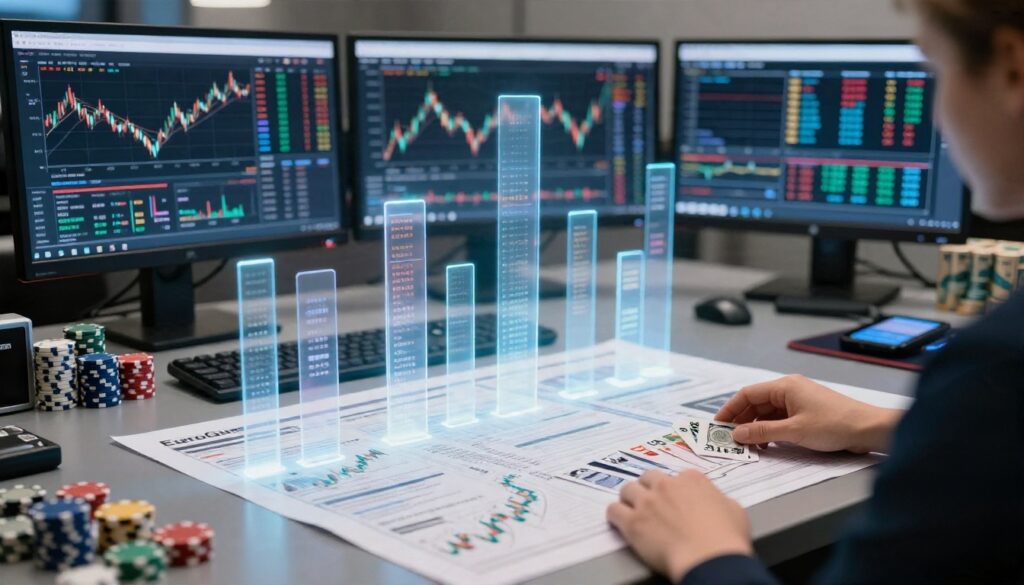
Market depth, also called depth of market or DOM, shows quantities of buying and selling interest at a range of prices. A typical display presents these levels as a ladder, with prices alongside the quantity visible at each level.
The highest displayed bid and lowest displayed ask form the top of book. Levels beyond those prices show additional interest at less favourable prices: lower bids and higher asks. The number of levels shown depends on the platform and its feed.

How bids, asks and price levels fit together
A bid is a price at which displayed participants are willing to buy. An ask, sometimes called an offer, is a price at which they are willing to sell.
For a trader looking to buy immediately, the displayed asks are the relevant side of the ladder. A trader looking to sell would look at the bids. Each quantity describes interest at that price, subject to the feed’s terms.
These entries show pending interest, not completed trades. Depending on the platform, the display may contain orders, provider quotes or an aggregation of available prices. A visible quantity doesn’t establish who placed it or whether it belongs to one participant.
What the ladder does and doesn’t show
The ladder can show whether displayed quantities are concentrated close to the best prices or spread across several levels. That helps frame a practical question: how much size appears to be available before the next price level?
It doesn’t show how long those quantities will remain. Nor should you confuse the size displayed at a level with trading volume already completed there. Those are different measures, even when a platform presents both nearby.
What order-book size may reveal about liquidity and execution
Liquidity describes how readily an order can be executed. Visible quantities near the best prices offer one snapshot of the size available on that book, although they don’t establish what will remain when an instruction reaches execution.
The Bank for International Settlements’ work on FX liquidity treats depth as related to the cost of trading larger amounts. That makes size relevant alongside the quoted spread.
Spread and order size are different measures
The spread is the difference between the best bid and the best ask. It tells you the gap between those two prices, but it doesn’t tell you how much can be traded at either price.
A narrow spread can appear attractive even when the quantity at the best ask is small. If a buy market order exceeds that available quantity, it may execute against higher asks as well. The resulting average price can therefore be higher than the initial best ask.
The same principle applies to a sell order consuming bids at lower prices. Actual fills depend on the product, execution arrangement and liquidity available when the order is handled. Some instructions may be partially filled, rejected or handled differently under the applicable terms.
Reading imbalances without treating them as signals
A larger displayed quantity on the bid side means more buying interest is visible at those levels on that feed. It doesn’t establish that buyers dominate the wider forex market or that the price will rise.
The price levels matter too. A large quantity far from the current quote may have less immediate relevance than a smaller quantity close to the top of book. Either can change before an order reaches it.
I wouldn’t treat an imbalance as a dependable buy or sell signal. The display offers a limited view of posted interest, while trading elsewhere and changes to the book remain outside that snapshot.
Why a forex depth display is only part of the picture
Spot forex is an over-the-counter market, with trading distributed across dealers, venues and liquidity pools. There is no single global order book covering every participant. The BIS analysis of fragmented FX execution describes how trading can occur within dealers’ own liquidity pools as well as on visible venues.

Some interest isn’t displayed at all. A retail broker’s DOM may show liquidity available through its platform or connected providers, rather than a consolidated picture. Its scope also depends on whether you are viewing an OTC product, a CFD or a particular exchange-traded instrument.
Orders can change before you act
Participants can amend or cancel displayed orders, sometimes before you have time to respond. A large quantity visible on a ladder is therefore not necessarily a lasting price barrier.
Some cancellations form part of ordinary trading. Spoofing involves deceptive intent, so a cancellation or a large order alone doesn’t establish manipulation. Research on spoofing in foreign exchange markets examines how order submission strategies can affect apparent market depth.
Visible liquidity can also appear on more than one venue. Adding quantities across displays may overstate the amount that remains available once trading occurs.
Depth cannot guarantee a price or prevent losses
A quote on screen isn’t a reservation for your order. Volatility, gaps, thin liquidity, order size and execution rules can all affect the eventual fill.
Slippage is the difference between the expected or requested price and the execution price. It can be favourable or adverse. Our guide to forex slippage during major news releases explains how changing quotes can affect both entries and exits.
Leverage increases exposure relative to the funds committed and magnifies gains and losses. An ordinary stop-loss sets a trigger; it doesn’t reserve the exit price.
How to use market depth as one part of your trading process
I would use DOM as a research aid alongside a defined risk plan, not as a replacement for one. Before interpreting a ladder, establish what its prices and quantities mean for the product and account you are considering.
Understand the feed and compare order size
The platform documentation and execution policy should describe the display’s source, the units shown and how the feed updates. Quantities may use different units across products or platforms, so a figure on one screen shouldn’t be assumed equivalent to the same figure elsewhere.
Compare your intended order size with the visible quantity at the best price and at subsequent levels. That exercise can show where the displayed book may be thin for your instruction. It cannot establish the final average fill because the book can change.
Also consider whether the display covers executable quotes or indicative information. A useful-looking ladder has limited value for execution analysis if its relationship to your account’s orders isn’t clear.
Match order types and costs to the risk plan
A market order generally seeks execution at an available price. A limit order sets a price condition, but may remain unfilled if sufficient liquidity isn’t available on those terms. An ordinary stop can trigger an exit instruction without guaranteeing its execution price.
Depth also leaves other costs outside the display. Depending on the product, commissions, financing charges and currency conversion can affect the result alongside spread and slippage.
I would assess position size separately from visible liquidity. Our guide to forex position sizing based on trade risk explains how trade size relates to a risk budget and stop distance. Even a planned stop can fill beyond its trigger, so the estimated loss is not always the realised loss.
Frequently Asked Questions
Is forex market depth the same across brokers?
No. Brokers can use different venues, liquidity providers or platform feeds, so their displays may show different prices and quantities. The relevant platform documentation defines the scope of each display; a broker’s DOM shouldn’t be assumed to consolidate the market.
Does a deeper order book mean a currency pair is safer to trade?
No. More displayed size may suggest greater visible liquidity on that particular book, but it doesn’t make the pair safe. Volatility, leverage and execution risk can still produce losses, especially if the displayed interest changes.
Can market depth predict whether a price will rise or fall?
No. Visible orders are a changing snapshot rather than a reliable forecast. Participants can cancel orders, and the display can omit trading interest elsewhere.
What happens when an order is larger than the quantity at the best price?
It may execute against further price levels, producing a different average price from the top-of-book quote. The outcome depends on the liquidity available when the order is handled and on the applicable execution conditions. Partial fills or rejection may also be possible.
Can a retail forex trader see the whole market order book?
No. The fragmented over-the-counter forex market has no single consolidated order book. A retail platform generally shows the scope of its own feed or connected liquidity, subject to the provider’s terms.
Market depth is a limited view
Market depth can show visible interest at successive prices and help you assess how an intended order compares with displayed size. That makes it useful context for questions about liquidity and execution.
I would keep its limits in view. A ladder is specific to its feed, can change quickly and cannot predict direction or guarantee a price. Trading decisions still involve costs, uncertainty and the possibility of loss.