
Regional tension and market moves are documented, but the available evidence doesn’t confirm a general shutdown of brokers in Dubai, a platform outage or a change to client funds. Those are separate claims, and each needs broker-specific evidence.
If you hold a trading account connected to Dubai, security headlines alone don’t establish what happened to your service. My assessment separates official statements, disputed accounts and market movements from evidence about broker operations.
The distinction starts with the dates behind the headlines.
Key Takeaways
- UAE authorities reported Iranian attacks beginning on 28 February 2026; the August missile account was disputed by Iran.
- Official notices confirm UAE equity-market closures on 2 and 3 March, followed by reopening on 4 March.
- Dubai’s index movements don’t establish forex-broker outages, unusual trading costs or losses affecting client accounts.
- Account protections depend on the contracting company, regulator, product and client classification, rather than the brand alone.
- Leveraged forex and CFD trading can produce rapid losses, even without any broker-service disruption.
What’s Up with Brokers in Dubai After Iran Attacks?
The key dates behind the headlines
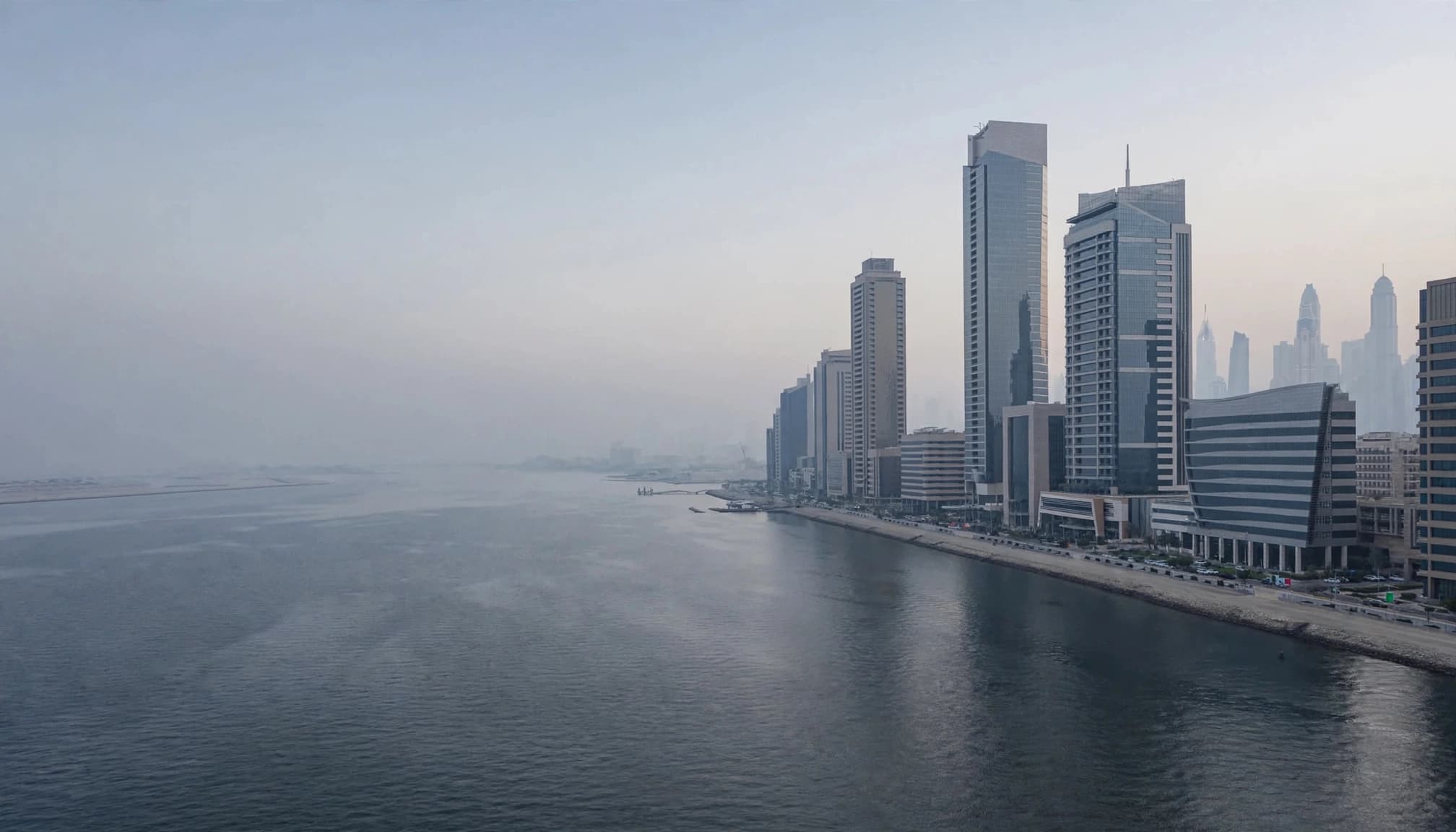
On 28 February 2026, the UAE Ministry of Foreign Affairs condemned what it described as Iranian missile attacks. The UAE Ministry of Defence also said the country had been attacked with Iranian ballistic missiles. Those statements establish the UAE authorities’ account.
The UAE Capital Market Authority subsequently announced that Dubai Financial Market and Abu Dhabi Securities Exchange would close on 2 and 3 March. DFM published a matching circular, and the authority announced trading and settlement would resume on 4 March. These were documented equity-market interruptions, rather than evidence that forex brokers stopped operating.
On 18 August, Reuters reported that the UAE said it had detected two ballistic missiles launched from Iran. UAE authorities assessed that they targeted maritime traffic and fell into the sea. Iran’s foreign ministry rejected the allegation. I wouldn’t present that disputed account as independently established.
October coverage also requires care. A warning about what the UAE would do if attacked again doesn’t establish another attack. Claims of renewed attacks remain unconfirmed where primary corroboration is absent.
What the market moves do, and do not, tell us
According to Reuters’ 9 October market report, Dubai’s benchmark index closed 0.3% higher, ending a three-session losing streak. It nevertheless recorded a second consecutive weekly decline.
That supports an account of unsettled equity-market sentiment. It doesn’t establish unusually wide forex spreads, failed orders, client losses or withdrawal restrictions.
An equity exchange’s closure establishes a change to that exchange’s operations. It doesn’t establish the status of a separate forex broker.
The same boundary applies to a recovery: rising shares don’t demonstrate that an individual trading platform was available or functioning normally.
Have Dubai forex brokers changed how they operate?
The available evidence contains no named broker notice confirming attack-related changes to trading hours, spreads, leverage, execution, deposits, withdrawals or client-fund arrangements.
That finding has limits. It doesn’t establish that every broker was unaffected, and it doesn’t justify treating all Dubai-based firms as one operation.
Look for broker notices, not assumptions
Transport disruption can affect staff, travel and business logistics without disabling a trading platform. Equally, a general statement that telecommunications remained functional doesn’t establish uninterrupted service for every broker or customer.
I give more weight to a dated notice identifying the affected company, service, instrument and period than to an unsourced social-media claim. A screenshot of an error message may document an individual’s difficulty, but it doesn’t establish the cause or scale.
Useful operational evidence distinguishes between a login problem, rejected order, delayed payment and market closure. These involve different systems and responsibilities. Grouping them under “Dubai brokers are down” makes the claim broader than the evidence supports.
The absence of an announcement also has limited meaning. Silence alone establishes neither uninterrupted service nor a concealed problem.
The legal entity matters more than the brand
A broker group can operate through separate companies in the Dubai International Financial Centre (DIFC), elsewhere in the UAE and in Europe. The Dubai Financial Services Authority regulates financial services in or from the DIFC; that isn’t a single permission covering every UAE activity.
The company named in the client agreement is the contractual starting point. Its regulator, permitted activities and account terms determine the relevant relationship.
My assessment of brokers’ Middle East expansion makes the same distinction: a regional office doesn’t establish that a European business relocated.
Client-money segregation, compensation eligibility and negative balance protection address different risks. None provides general insurance against trading losses, operational failures or misconduct. A familiar logo doesn’t transfer one group company’s protections to another.
What European traders should check before making a decision
For European traders, regional headlines provide context. They don’t establish whether a particular account requires a deposit, withdrawal or position change.
I would base that assessment on account-level evidence rather than a general judgement about Dubai’s financial sector.
Check access, costs and withdrawal terms
The relevant record combines dated service communications, the account agreement, execution terms and the fee schedule. Together, these describe platform availability, order handling, payment routes and withdrawal conditions.
A meaningful cost assessment includes the spread, which is the difference between buying and selling prices, plus commissions and overnight financing. Currency conversion, withdrawal and inactivity charges may also matter where they apply.
Minimum and typical spreads aren’t equivalent measurements. Comparisons need the same instrument, account type and trading conditions. An advertised minimum doesn’t establish the price available during a period of market stress.
Country and classification also matter. UK, EU, EEA and Swiss arrangements aren’t interchangeable. Product availability, complaint routes and protections can differ between retail and professional accounts.
Remember that volatility can magnify trading risks

Leverage creates exposure larger than the margin committed. It magnifies losses as well as gains, including on contracts for difference (CFDs), which track price movements without ownership of the underlying asset.
Fast price moves, gaps and reduced liquidity can affect execution. Slippage is the difference between the requested price and the eventual fill; our guide to slippage during major news releases explains the mechanism.
An ordinary stop-loss order doesn’t guarantee execution at its specified price. A gap can carry the market beyond it before execution occurs.
These are trading risks, not findings that a named Dubai broker experienced them during the attacks. A functioning platform and regulatory authorisation don’t prevent rapid market losses. Lower advertised fees don’t remove those risks either.
Frequently Asked Questions
Are Dubai forex brokers still open?
The available information doesn’t establish a general closure of Dubai forex brokers. It also doesn’t provide a live service-status record for every firm. The March exchange closures concerned named equity markets, so they can’t answer whether a particular forex account remained accessible.
Have traders reported a confirmed broker outage?
The evidence reviewed doesn’t confirm an outage at a named broker linked to the attacks. Individual reports can identify a problem worth investigating, but they don’t establish a platform-wide failure. A verified notice or independent finding would need to identify the affected service and period.
Could trading costs or margin requirements change?
Conditions can differ by broker, account and instrument, whilst market stress can affect pricing and execution. Margin is the amount required to support a leveraged position; its requirements are separate from spreads and commissions. No attack-related change to those terms is established for a named broker in the available evidence.
Does a Dubai licence protect every European client?
A Dubai permission doesn’t automatically provide the same protections as an account with a European group company. Coverage depends on the entity, regulator, country, product and client classification. Permission to arrange investment business also shouldn’t be treated as permission to hold client money. I regard broad claims such as “fully regulated in Europe” as incomplete without those details.
Should traders move their money because of the attacks?
The headlines alone don’t support a general instruction to move money, and I wouldn’t make a personalised financial recommendation from them. A decision needs a documented account-level concern, the applicable contract and the available withdrawal routes. Where a material concern remains, qualified advice can help assess the implications without assuming that a rushed transfer removes risk.
Conclusion: Account evidence carries more weight
The attacks and related market concerns warrant attention. The evidence doesn’t support claims of a general Dubai broker shutdown or confirmed broker-wide account disruption.
My verdict rests on account-specific evidence: current notices, the contracting company and the terms governing the service. Those details carry more weight than a regional headline, whilst leveraged trading can still cause rapid losses without any operational failure.